3D Christmas Socks: A Comprehensive Guide to Digital Files and Design Tools
The holiday season brings a unique blend of creativity and tradition, and few projects capture the spirit of winter crafting quite like 3D Christmas socks. Unlike flat ornaments or simple cutouts, these designs offer depth, texture, and a playful dimension that transforms standard fabric or paper into whimsical decorations. For crafters and DIY enthusiasts, the success of such a project often hinges less on the physical materials and more on the quality and versatility of the digital source files used to create them.
When evaluating resources for this type of project, it is essential to understand what makes a specific 3D Christmas sock design stand out. The most effective versions are not merely images; they are engineered with precise vector paths and layering instructions that allow for accurate assembly. This article explores the technical nuances of downloading comprehensive file packages, comparing software compatibility, and determining which approach best suits your specific crafting goals.
Understanding the Distinction of 3D Christmas Sock Designs
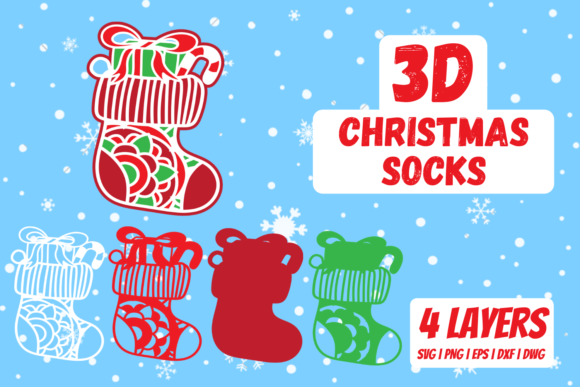
A standard 2D image can be printed and glued together, but true 3D construction requires a different level of digital precision. 3D Christmas socks rely on layered cutting techniques where individual components are designed to interlock or stack, creating volume. The distinction lies in the preparation of the digital asset. High-quality downloads provide separate layers for the toe, heel, cuff, and decorative elements, allowing the crafter to control the depth and structural integrity of the final product.
This separation is critical because it allows for customization. Whether you are working with felt, cardstock, or vinyl, having distinct layers means you can adjust the thickness of each part or add internal supports without altering the overall silhouette. The goal is to move beyond a flat representation and achieve a tangible object that looks as good from every angle. This capability is what separates a professional-grade resource from a basic clipart image.
File Format Versatility: SVG, DXF, EPS, and PNG
The value of a digital download is often defined by the variety of formats included. A robust package typically comes in a zipped folder containing multiple file types, each serving a specific purpose within the design workflow. Understanding the strengths of each format helps users select the right tool for their machine and skill level.
SVG (Scalable Vector Graphics) is widely considered the gold standard for modern electronic cutting machines. It preserves vector data, meaning the lines remain crisp regardless of size scaling. This format is particularly powerful when used with advanced software ecosystems. For instance, an SVG file for 3D Christmas socks can be imported directly into Cricut Design Space, Silhouette Designer Edition, Make The Cut MTC, Sure Cuts A Lot SCAL, and Brother Scan and Cut Canvas software. These platforms allow for complex editing, such as grouping layers, mirroring images for reverse printing, and assigning specific cut settings to different parts of the sock design.
In contrast, DXF (Drawing Exchange Format) serves as a universal bridge between CAD programs and entry-level cutting machines. While SVG offers superior editing capabilities within proprietary software, DXF is the preferred choice for those using Silhouette Basic Edition or other budget-friendly hardware that may not support full vector manipulation. It ensures that the geometry of the 3D Christmas socks remains intact even if the user does not have access to premium design suites.
EPS (Encapsulated PostScript) files are essential for professionals who rely on industry-standard graphic design tools. Users working with CorelDraw, Inkscape, or Adobe Illustrator will find the EPS format indispensable. These applications excel at color management and complex layout adjustments. An EPS file allows designers to manipulate the stroke weights, apply gradients, or integrate the 3D Christmas socks design into larger marketing materials before sending it to the cutter.
Finally, PNG (Portable Network Graphics) provides a rasterized solution. While it lacks the editability of vectors, a high-resolution PNG with a transparent background is invaluable for quick visualizations or printing on home inkjet printers. At 300 DPI, this photo file ensures that any text or intricate details remain sharp when printed on standard paper, making it a useful backup for non-machine methods.
Software Compatibility and Workflow Integration
Selecting the right software is just as important as choosing the correct file format. The ecosystem you work in dictates how efficiently you can bring a 3D Christmas socks design to life. For hobbyists invested in the Cricut ecosystem, the seamless integration of SVG files into Design Space simplifies the process. Users can drag and drop layers, arrange them for stacking, and immediately send the job to the machine without intermediate conversion steps.
However, not all users start with the same software. Those utilizing Silhouette Studio often prefer the flexibility of the Designer Edition over the Basic version. The Designer Edition unlocks features necessary for handling complex multi-layered files, such as the ability to weld shapes or create compound paths. If a user is restricted to the Basic Edition, relying on the provided DXF file becomes the optimal strategy, ensuring that the design cuts correctly without requiring expensive software upgrades.
For the professional designer or the tech-savvy maker, the combination of Inkscape or Adobe Illustrator with an EPS file offers the highest degree of control. These programs allow for fine-tuning the dimensions of the 3D Christmas socks to fit specific fabric widths or frame sizes. Furthermore, the ability to trace bitmap images or modify vector nodes ensures that no detail is lost during the transition from screen to physical object.
Evaluating Tradeoffs: When to Choose One Approach Over Another
While a comprehensive download offering SVG, DXF, PNG, and EPS formats covers almost every base, there are scenarios where specific formats shine brighter than others. The decision often comes down to the balance between convenience, cost, and desired output quality.
If your primary goal is speed and ease of use, the SVG format paired with Cricut Design Space or Brother Scan and Cut is likely the best fit. These workflows are streamlined for beginners, reducing the learning curve associated with vector editing. However, this convenience comes with a tradeoff: you are somewhat limited to the capabilities of the specific software you own. If you need to perform advanced edits outside of that environment, you might find yourself needing to convert the file, which can sometimes degrade quality.
Conversely, if you are working with a strict budget or older hardware, the DXF and PNG options provide a practical alternative. They ensure that the project remains accessible without requiring the latest subscription services or high-end workstations. The limitation here is reduced flexibility; you cannot easily rearrange layers or change colors within the cutting software itself. You must plan the entire design composition before importing the file.
For those prioritizing print quality and artistic modification, the EPS format is superior. It integrates perfectly with professional design pipelines, allowing for high-fidelity output. The tradeoff is the requirement for more specialized knowledge. Editing an EPS file effectively demands familiarity with vector graphics principles, which might be a barrier for casual crafters looking for a quick holiday decoration.
Practical Applications and Decision Factors
Ultimately, the choice of 3D Christmas socks resources depends on the intended application. Are you creating a single statement piece for a mantle display, or are you producing a batch of ornaments for a gift exchange? If mass production is the goal, the efficiency of the SVG workflow with automated cutting mats is crucial. The ability to quickly duplicate and align layers saves significant time compared to manual tracing or adjusting DXF files.
On the other hand, if the project involves mixed media—such as combining cut vinyl with hand-painted details—the PNG file serves as a perfect guide. Its transparency allows you to overlay the design onto colored backgrounds or textured fabrics to visualize the final look before committing to the cut. This visual planning stage is often overlooked but is vital for achieving a cohesive aesthetic.
Furthermore, consider the material you intend to use. Felt and foam require precise, clean cuts to maintain their shape, making the vector precision of SVG and EPS files mandatory. Paper-based crafts might tolerate the slightly softer edges of a raster PNG, especially if the pieces are glued together rather than stacked. By matching the file format to the material properties, you ensure that the structural integrity of the 3D Christmas socks is preserved.
Making an Informed Choice for Your Holiday Projects
The market for digital crafting assets is vast, but not all resources are created equal. A well-structured package that includes SVG, DXF, PNG, and EPS formats in a single zipped folder represents a thoughtful investment. It acknowledges the diverse needs of the crafting community, accommodating everyone from the beginner using a basic cutter to the professional designer managing complex layouts.
When researching options, look for descriptions that explicitly mention compatibility with the major software suites mentioned earlier. Verify that the file list confirms the inclusion of all four formats. This ensures that you are not locked into a single platform and retain the freedom to switch tools as your skills evolve or your equipment changes. By understanding the technical specifications and the strengths of each format, you can confidently select a resource that delivers the best results for your 3D Christmas socks creations.
In conclusion, the journey from a digital concept to a festive, three-dimensional reality relies heavily on the foundation laid by the source files. Whether you prioritize the ease of Cricut Design Space, the accessibility of Silhouette Basic Edition, or the power of Adobe Illustrator, having a versatile collection of formats guarantees that your holiday crafting experience is smooth, efficient, and creatively fulfilling. Take the time to evaluate your current toolkit and choose the resource that aligns best with your workflow, ensuring your 3D Christmas socks turn out exactly as envisioned.